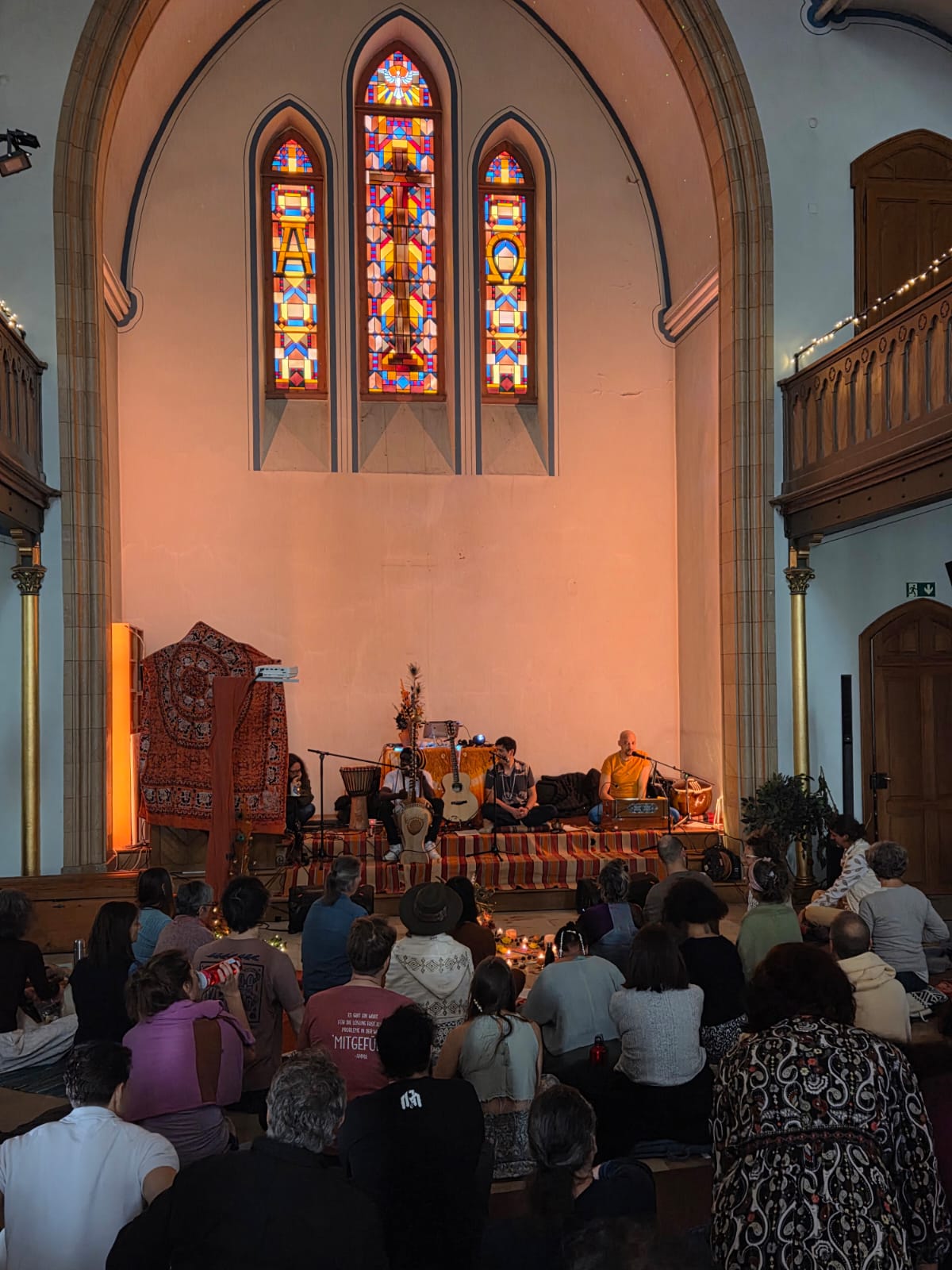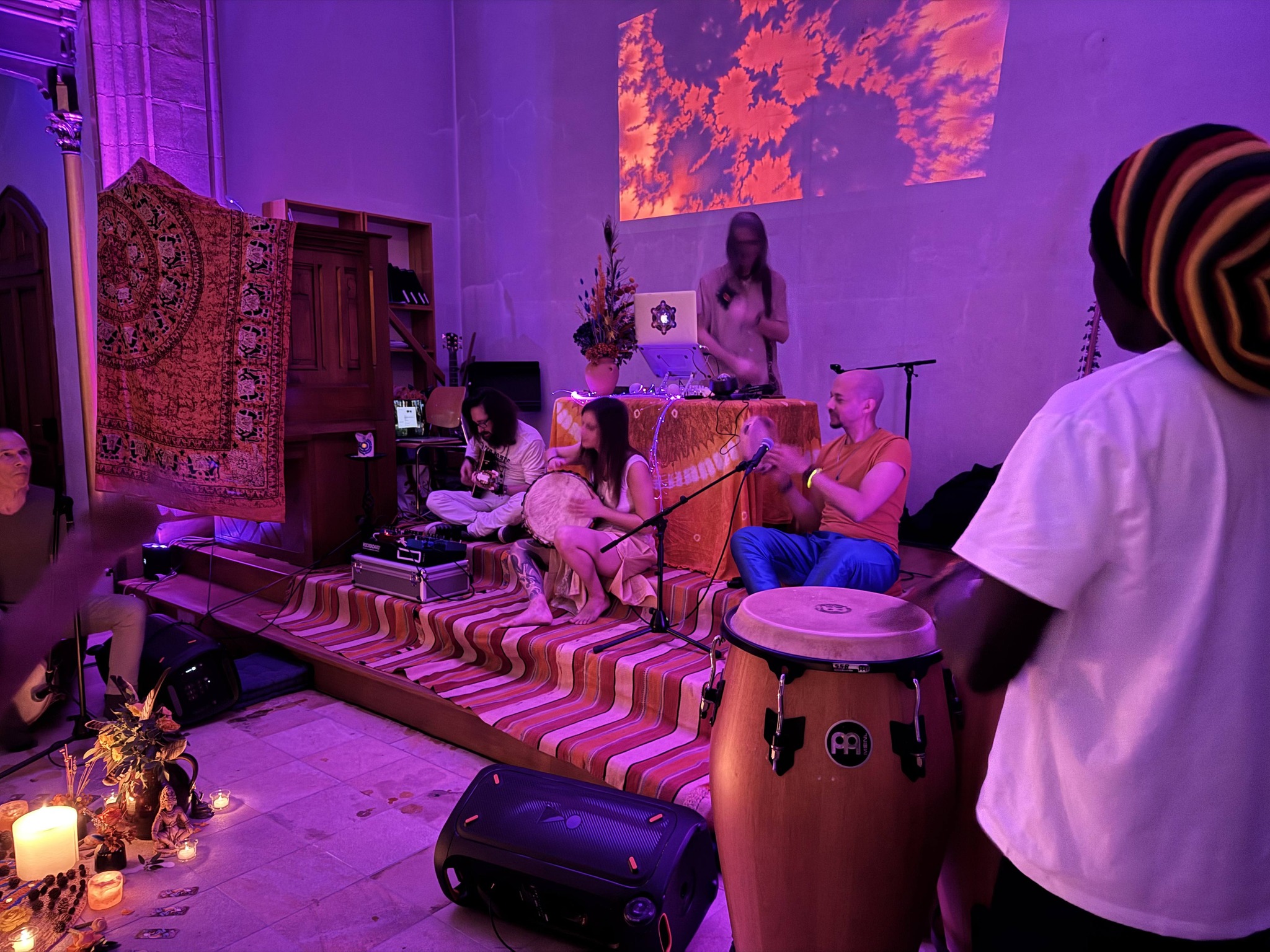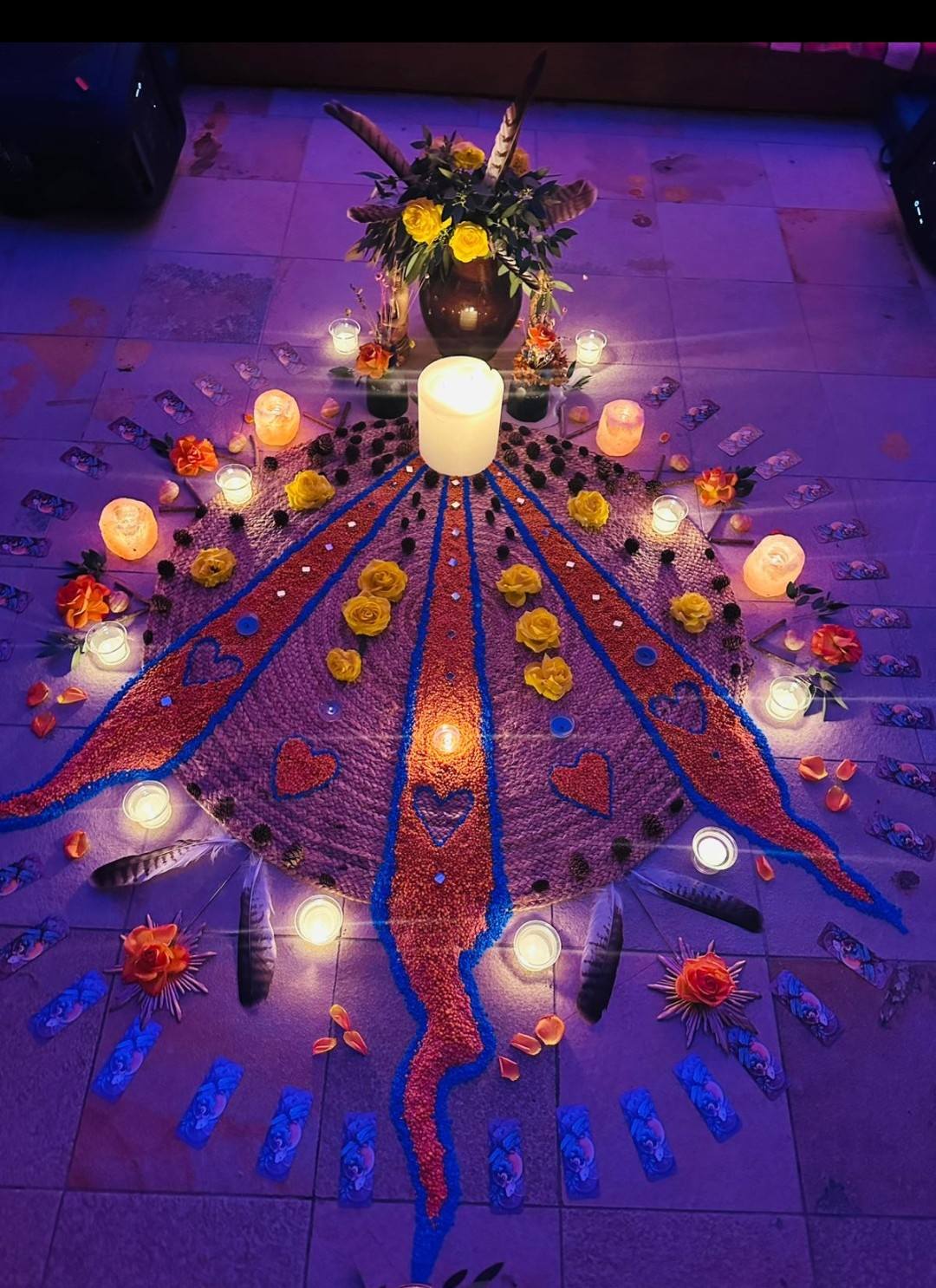
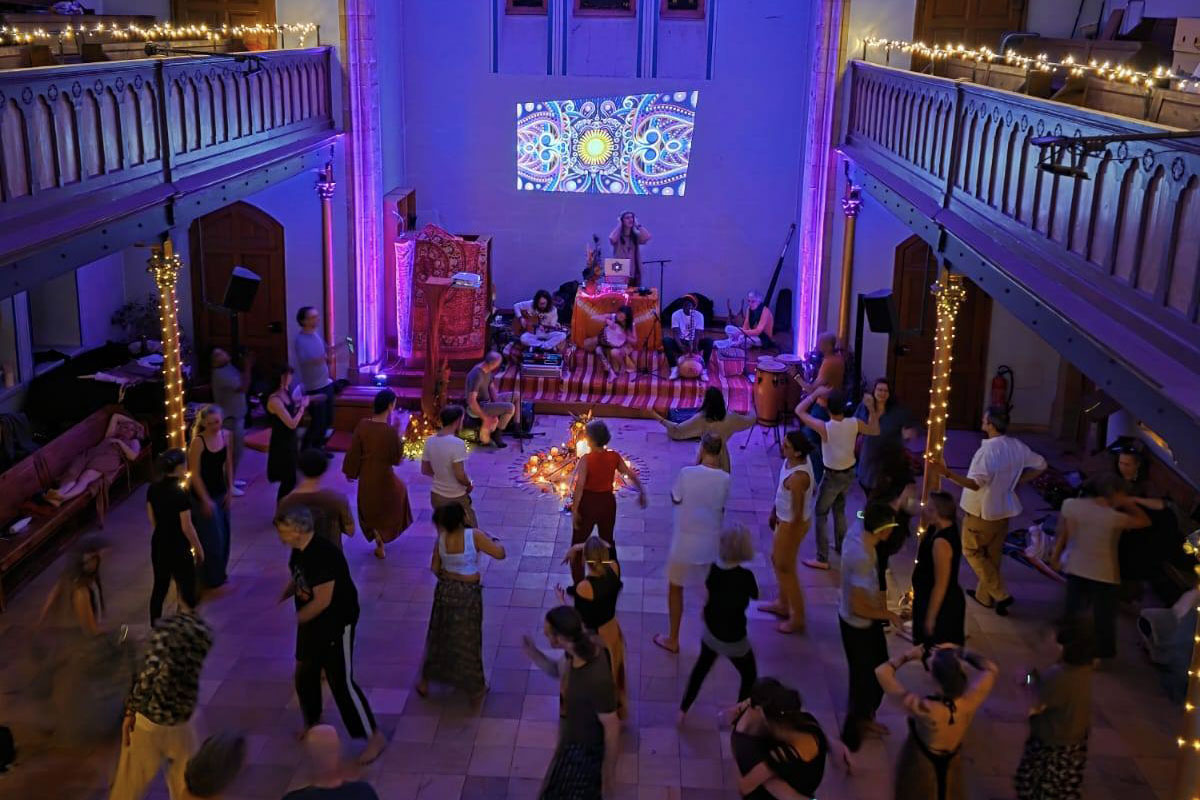
Our first Mosaic Heart event took place at Mosaic Village on February 7. Mosaic Village is a Church Otherwise with an emphasis on inclusivity, incorporating not only gender, generations, cultures and ethnicities, socio-economic strata and nature, but also different Christian (ecumenism) and religious (interfaith and interspiritual) approaches.
Our Methodist chapel in Lausanne was built in 1866. This year, we celebrate 160 years! We’re delighted to be able to continue caring for this sacred and consecrated place, with the theological concern to listen to Christ’s call from a contemporary hermeneutical perspective, i.e. how to live and communicate his message of divine love in words and deeds that speak to people today. Churches suffer from not finding this language that speaks and touches. By dint of wanting to keep the letter as translated two thousand years ago, we sometimes forget that “the letter kills, the spirit gives life” (2 Cor 3:6). Indeed, the letter must follow the spirit, because the reverse does not work. But “speaking of” God means first of all clarifying what we mean by “speaking”. If we consider that speech is a way of designating and representing to ourselves and to others what we imagine or perceive about God, then this speech is something that attempts to bear witness to, to reveal what we think or feel about God. Talking about God is a possibility that materializes with every word, act (according to Ludwig Feuerbach), emotion and thought we have when we are moved from within by God. God cannot be spoken from the outside alone, but can be spoken when He/She is spoken through our interior by His love. So it’s more a question of witnessing and experiencing together than of external words. The word is a “theophanic and performative” power (Walther Zimmerli) that can either liberate or imprison. It liberates and reveals whenever it emanates from our inner, God-breathed love, and it imprisons whenever that love is not. So it’s not the word you have to look for, it’s the love that says the word you have to look for. God cannot be communicated by the empty word of this love. God is not a word that designates an “object”, but one that experiences a relationship, an encounter (see LaCocque and Zimmerli). Love fills all the words of the Word of God. Our activities at Village Mosaïque seek to communicate and live this Word, this Word of God that touches our present reality.
As we no longer wish to impose the idea of a church in the middle of the village, but rather to invite the village, in all its human diversity, into the heart of the church, the challenge of coexisting ways of thinking and believing is not without its difficulties. We could say that, at this level, we bring together “religious” people, people who call themselves “spiritual”, and people who call themselves “atheists”, with the possibility of feeling part of several of these “categories” at the same time. Isn’t this contradictory for a church? Yes, it is, but it’s precisely by bringing contradictions together under the same roof that true union can be experienced, that divine love which encompasses and reconciles within itself all the polarized contradictions and tensions of the human being. It’s sometimes easier to think that, as a church, we need to position ourselves along a specific path so as to attract only people who “think like us”, who are on “the same wavelength”. But is there really a single person on earth who thinks 100% like me? Who has “the same faith as me”? And is this really what “church” is all about, the narcissistic gathering of people who look alike? And haven’t we already had enough experience to show that, even if we think we’re adopting the same theological vision in a group, there will always be someone who takes offence that the “Our Father” is recited at the end rather than in the middle of the service, or vice versa, that a candle shouldn’t be lit, that a psalm hasn’t been recited, or that such and such a woman’s skirt is too short or too long? In any case, human beings are always the subject and actor of divisions. So the idea here is no longer to force a unity that doesn’t exist anyway through dogmatic imposition and concept, but to welcome all kinds of differences and divisions and create spaces where these people can meet, to weave a bond. Because when we spend time with each other and experience moments of deep connection, all those divisions collapse. To meet another is to meet God. To meet the other is to meet the Other.
Our mission as a Mosaic Church is to welcome with grace and divine love, to discover the value of each person, to deepen our spiritual paths, and to embody more justice and peace. We want to realize this mission in Christ. But who is this Christ? Is Christ only in Jesus? There is, however, a non-exclusive vision of Christ. Christ can be seen as non-exclusive to Christianity, as that force of the Living that beats in the heart of every tradition or non-tradition, in every living being quite simply. Jesus himself was always in dialogue with other religions or ways of seeing the world than the one he was born into, and welcomed all differences. Mosaic Heart is just another way of bearing witness to this unity in diversity, of celebrating this Living One in a holistic way, i.e. through the spirit (an epiclesis meditation and prayer at the start of the event), the mind (sharing texts, poems or other approaches that take us beyond our mental barriers, etc.) and the emotions (art, sharing sacred songs from different traditions around the world, etc.), but also through the body (a prayer and meditation at the start of the event).), but also through the body (sharing healthy food and drink, dance movement or ecstatic dance, which are free and intuitive dance forms, without choreography or judgment, promoting authentic expression, letting go and reconnecting with the Source within and beyond oneself, practiced without alcohol or drugs, often barefoot and without speaking). Mosaic Heart is therefore a 7-hour journey into the exploration of this voice and way of the heart, this love that doesn’t necessarily need a name because a name would limit it, this love that connects us all, beyond the name and the variety of spiritual approaches people may have. At Village Mosaïque, every color has its place. We have embarked on this adventure and this enthusiasm to co-create a story more beautiful than what the world of divisions proposes and imposes on us, to act out a story of a world more inspired, filled with wonder and solidarity, intercultural, intergenerational, interpersonal, interspiritual, where every soul has its place and can fully express itself in the mosaic of the great human family and the great family of living beings that we all form together, in a single living heart that beats and breathes its spirit of Love wherever it goes.
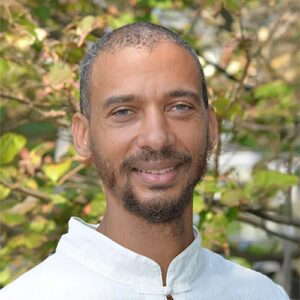
After monastic experience and extensive travel between Angola, Sweden and the United States, Claudio has deepened his understanding of cultures, religions and spiritual approaches. Life Coach and certified preacher at the United Methodist Church in Princeton (USA), he is currently pursuing pastoral training at the University of Geneva and within the Swiss United Methodist Church. Father of two, he joined the co-creation of Village Mosaïque in 2022.