
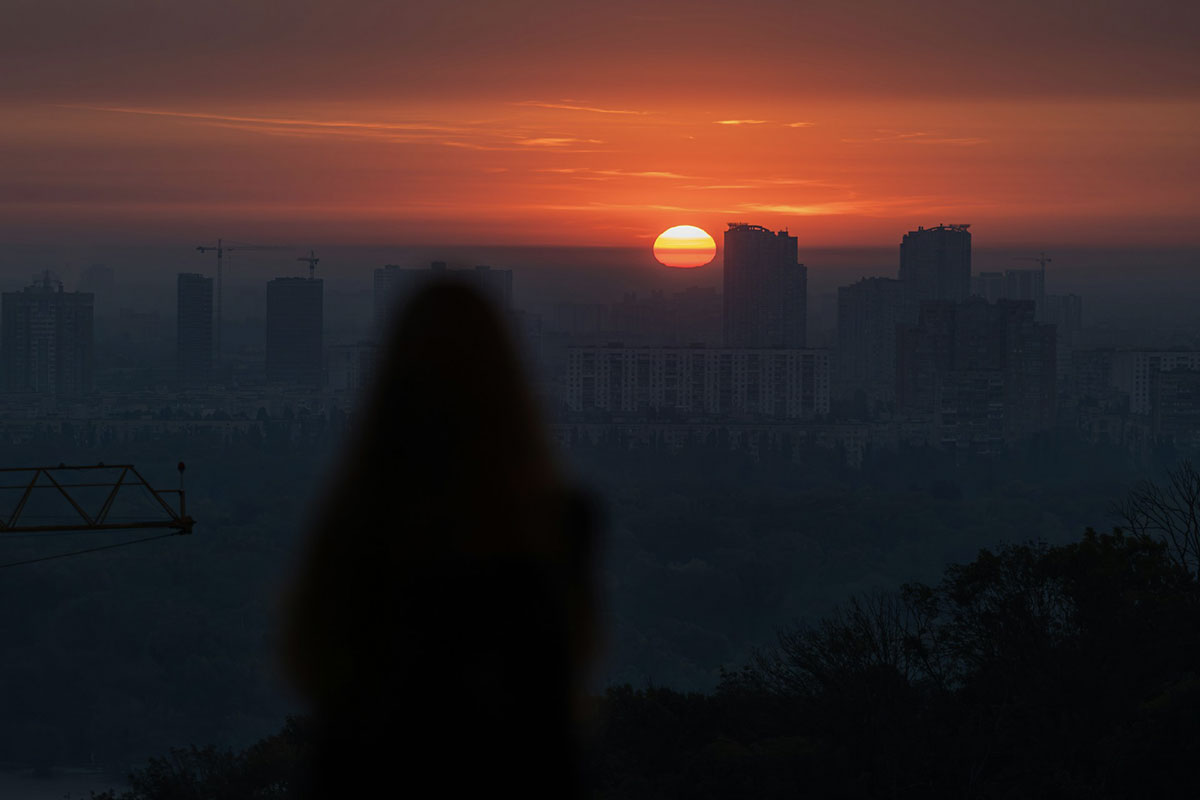
Is there a particular path in life that you haven’t taken? Perhaps at some point you chose one career over another. Maybe you couldn’t make it through university, or perhaps a relationship didn’t develop as you’d hoped. How has the memory of what could have been shaped your life (or not)?
Last Tuesday, I launched a new reading group on fertility, the desire for children and loss. Some participants were actively trying to become parents and were experiencing difficulties. Others had already experienced loss, but had finally had a child. Still others had never been able to have children due to relational circumstances, and were struggling to come to terms with this new reality. As I was preparing for this reading group, I came across an article that talked about mourning a life that hasn’t been lived. I’d already thought a lot about the loss of a baby and the grief that comes from losing someone who never had a chance to develop. I’d also given a lot of thought to the idea of making peace with the undesirable situation of not having children. But I’d never made the connection between mourning a life that never materialized. For example, the inability to become a parent, but also the impossibility of following a particular career, of living (or returning) to a place where we want to live, or of having grown up in a family, culture or social group that didn’t allow us to develop our talents or passions.
Unfulfilled dreams can affect us as much as death or separation. In both cases, we’re faced with a new reality that we didn’t choose. They can also leave us with a sense of regret for the things we’ve done and especially for the things we didn’t do or couldn’t do. Many people have written about grief, and I’m certainly no expert in the psychology of grief. But it seems to me that unresolved grief can sometimes freeze us between the past (whether it was rosy or difficult) and a future that seems undesirable. So today, I’d like to explore this tension between looking back and looking forward.
In some passages, the Bible is very hard on people who look to the past. In Ecclesiastes 7:10, it says: “Do not say, “Why were the days of old better than these?” For it is not wise to ask such questions.”
Jesus himself used the backward glance of Lot’s wife as a negative example and warning, saying in Luke 17:32-33: ” 32RememberLot’s wife. 33Thosewho seek to save their lives will lose them, but those who lose their lives will save them.”
When Jesus was recruiting new disciples, one potential candidate said to him, “Lord, let me go and bury my father first.” 60But Jesus said to him, “Let the dead bury their dead; you go and proclaim the kingdom of God.” 61Anothersaid, “I will follow you, Lord, but first let me bid farewell to those at home.” 62Jesussaid to him, “Anyone who puts his hand to the plow and looks back is not worthy of the kingdom of God.” (Luke 9, 59-62)
Does Jesus really think so? Would he really prevent people from mourning? Would he really expect people to suddenly forget everything about their loved ones? Or is this some kind of metaphor for not getting stuck in the past, or an encouragement to keep our priorities clear?
Other passages in the Bible also encourage readers to forget the past and look to the future. In his letter to the Philippians (3:13), Paul writes: “One thing I do: I forget what’s behind me and strive to reach what’s in front of me. And in the Old Testament, Isaiah prophesies in God’s name: “Remember not the former things; dwell no more on the former things.” (Isaiah 43:18-19) At the same time, some passages encourage readers to remember the past, NOT to forget: ” Remember the old things, the things of old; I am God, and there is no other; I am God, and there is none like me. ” (Isaiah 46:9) What are we to make of these seemingly contradictory messages? Remember the past, forget the past, look only to the future?
It seems that sometimes it’s important to look back, and sometimes it’s important to look forward. Perhaps what’s most important is that what we focus on nourishes us, anchors us and allows us to flourish together. Perhaps what we’re called to resist is closing in on ourselves and our specific expectations. Sometimes we have specific dreams: to have a biological child, to get a particular job, to live in a particular place, for a particular person to love us the way we love them, for a deceased person to come back to life or for someone who has moved away to get close to us again. Sometimes, by focusing on these specific expectations, we exclude other possibilities. Hope requires us to let go of our expectations, to be open to a life we can’t imagine. As God said through the prophet Jeremiah, “I know the plans I have for you…plans of prosperity and not of misfortune, to give you a future and a hope.” (Jeremiah 29:11)
But if we’re mourning a life that wasn’t lived, we need to be able to mourn what was impossible before turning to new possibilities.
“Too often, when people express sadness about the life they could have lived, they are met with disdain. They’re told to be more realistic, or to stop living in a fantasy world. But this response misses something essential: mourning the life we couldn’t live isn’t about staying stuck in the past. It’s about honoring what’s been lost so we can move forward more freely, with compassion and creativity.”
“Grief makes room. When we allow ourselves to mourn the life we didn’t have, we begin to free ourselves from the shame of not having lived it. This shame is heavy. It tells us we should have done more, accomplished more, been more. But we did the most important thing: we survived. And now, survival can give way to something else, something creative, something graceful. When I mourn the life I couldn’t have, I make more room to live the life I can have.” (https://www.elephantjournal.com/2025/08/grieving-the-unlived-life-honoring-the-distance-between-what-was-what-might-have-been-lav-kelley/)
If the Bible sometimes has a clumsy tendency to want to heal grief instead of honoring it as an important part of healing, it succeeds beautifully in reminding us that hope is not something distant. Hope is, in fact, already here. The seeds of collective fulfillment have already been sown. The ingredients for a hopeful future are already here. After saying “Do not dwell on old things”, Isaiah’s prophecy continues: 19Behold, I will make new things that are already budding; will you not recognize it? Yes, I will make a way in the wilderness, paths in the heath.” (Isa. 43:18-19) Paul echoes this in 2 Corinthians, saying not “The old is gone and the new will soon come,” but “the new is here”-already. (2 Cor. 5:17) Good mourning allows us to be “less entangled in what was impossible and more attentive to what is emerging.” One day, one hour, one step at a time.
If you’re sitting in the shadow of a loss (whether it’s a person, a path not taken, a dream not realized, whether you’ve acknowledged and named that loss or not), I pray that you’ll find a way to grieve as you need to. And I pray that, however that process unfolds for you, you can trust that you’re not alone and that God hopes good things for you and for all of us. May you be fortunate enough to have by your side people you can trust, people who listen before they speak, who don’t try to solve your problems, but whose presence and love reveal glimpses of what is already emerging. Perhaps a strength you never knew you had, or a friendship that will deepen over the years, or a new passion that will enable you to use your talents to the full. God-with-us hope doesn’t come in the form of a guaranteed outcome, a predetermined plan or the promise of a happy ending. But it is collective, courageous, evolving and quietly tenacious. May this hope accompany us as we look back and look forward. Amen.
Erika grew up in Kansas, USA. Trained in music at Prague and Emory University, she earned a Master of Divinity (Yale, 2007) and then a PhD in the history of Christianity (Boston, 2016). After serving in seven Methodist parishes in the United States, she was pastor of the Evangelical Methodist Church in Lausanne (2015-2022), before helping to create Village Mosaïque.

